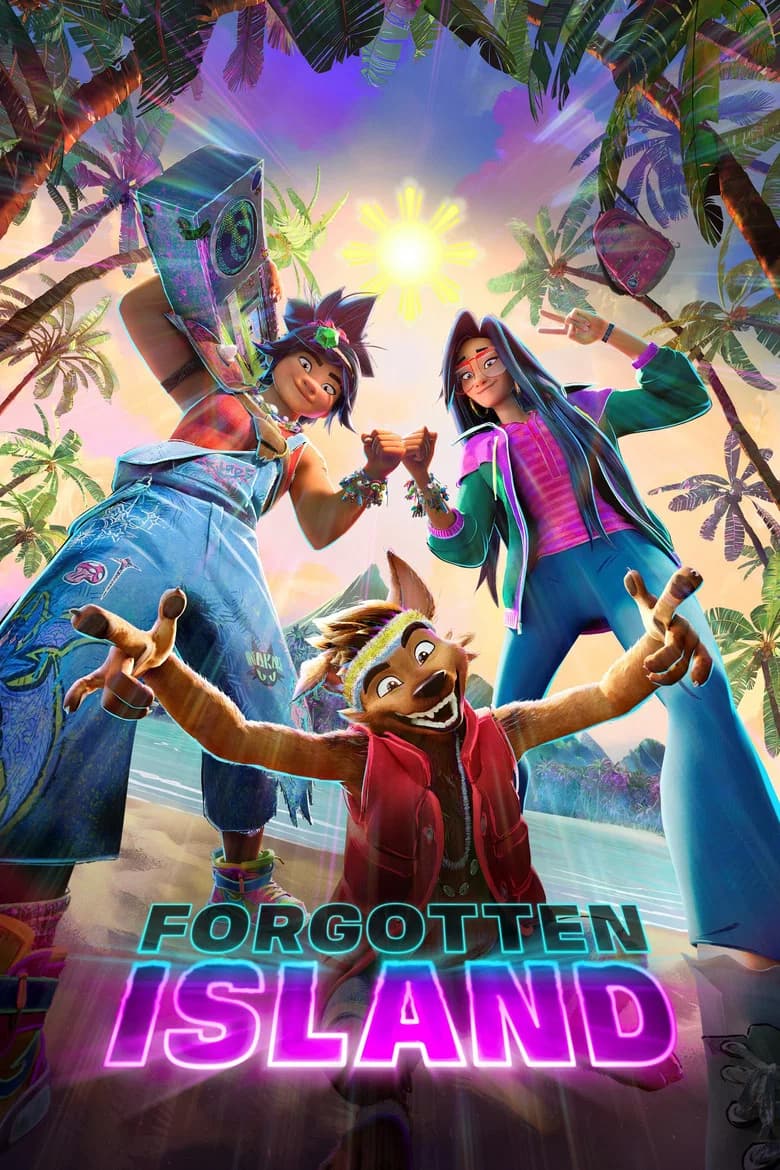
DreamWorks Animation has built much of its recent reputation on a simple bet: that audiences will reward animated features willing to be sincere about uncomfortable feelings. Puss in Boots: The Last Wish made a children's franchise sequel about the fear of death, and it worked. Forgotten Island, released in the US on September 25, 2026, and arriving in UK cinemas on October 16, 2026, looks like the studio doubling down on that instinct, this time with a story about the fear of losing the person who knows you best.
The premise is refreshingly clean. Jo and Raissa are best friends and freshly minted high school graduates, spending one last night together before adulthood pulls them in different directions. They stumble through a mysterious portal and land on Nakali, a fantastical island with a brutal exit fee. Going home costs them every memory of their friendship. So the two have to find another way out before the island erases what they mean to each other.
That's a sharp hook, and it's sharper than it first appears. The film is framed around the moment when childhood friendships are most at risk anyway. Anyone who's watched a high school best friend drift into a stranger after graduation will recognize the fantasy as a metaphor that barely needs decoding. The island doesn't invent the threat. It just speeds it up and makes it literal.
The filmmaking pedigree is the main reason this project deserves attention. The film is written and directed by Joel Crawford and Januel Mercado, who served as director and co-director respectively on Puss in Boots: The Last Wish. Crawford also directed The Croods: A New Age. The Last Wish is the relevant reference point here. It was a late-2022 release that could've been dismissed as franchise filler, and instead it became one of the most admired studio animated features of that decade, drawing praise for its painterly, stylized look and a genuinely menacing antagonist. It also played in theaters for an unusually long stretch, the kind of word-of-mouth run that studios can't buy.
If Forgotten Island carries over even part of that visual ambition, it could stand out in a market where too many animated releases still look interchangeable. DreamWorks has been pushing away from the glossy, uniform house style that defined much of the 2010s, and a portal-fantasy setting is an ideal canvas for more experimental design.
There's also a cultural dimension worth noting. The project draws inspiration from Filipino folklore, a meaningful step for a major American animation studio. Mainstream Hollywood animation has mined plenty of mythologies over the years, but Filipino myth has been almost entirely absent from wide-release studio features. The island's name seems telling too. Nakalimutan is the Tagalog word for "forgotten," and "Nakali" reads like a possible nod to it. Alongside the folklore at the heart of the story, that suggests cultural roots built into the concept rather than applied as decoration afterward.
On the voice cast, singer-songwriter H.E.R. voices Jo and Filipino actress Liza Soberano voices Raissa. It's a notable casting choice. Soberano is a major star in the Philippines, and giving her a lead role in a Filipino-inspired DreamWorks feature carries real weight with that audience. H.E.R. also raises the obvious possibility of original music, though nothing we've seen confirms how songs figure into the film. We'd rather not speculate beyond that.
The bigger question is commercial. Original animated features have had a rough decade theatrically, with audiences flocking to sequels and brand extensions while new IP often struggles to open. DreamWorks knows this as well as anyone. What Forgotten Island has going for it is a concept you can explain in one sentence and a filmmaking team with a recent track record of turning modest expectations into lasting goodwill.
Our read: this is one of the more promising animated titles on the 2026 calendar, precisely because it isn't relying on a brand. Whether it connects will depend on whether the emotional core lands as strongly as the logline promises. On paper, though, a story about two friends fighting to remember each other, made by the people who turned a cat in boots into a meditation on mortality, is exactly the kind of risk we want studios to keep taking.