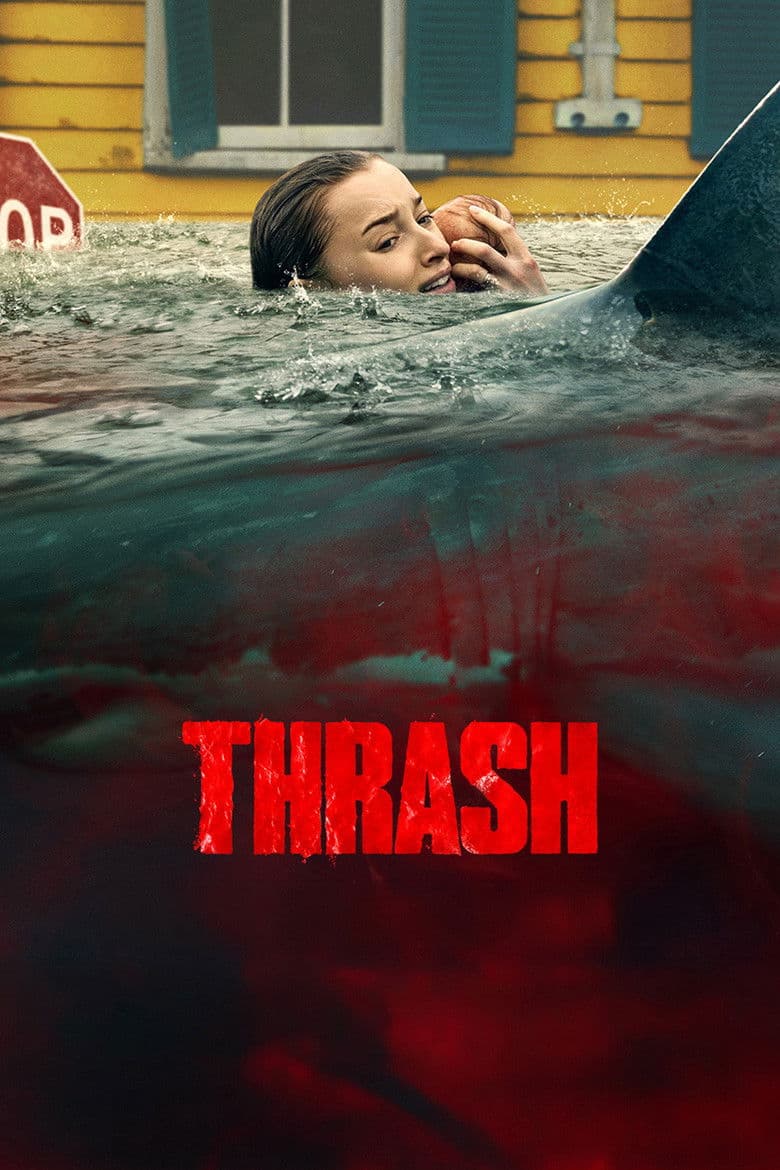
Thrash arrived on Netflix on April 10, 2026, after shifting away from an originally planned theatrical release. Directed by Tommy Wirkola, the film combines disaster and creature horror, dropping sharks into a flooded coastal town following a Category 5 hurricane.
The premise is exactly as direct as it sounds. A storm devastates a South Carolina town, floodwaters rise, and sharks move inland with it. The film follows multiple characters trying to survive as the environment collapses around them, with the central storyline focusing on a heavily pregnant woman caught in the middle of the chaos.
The cast is led by Phoebe Dynevor, alongside Whitney Peak and Djimon Hounsou, with the film leaning heavily on survival tension rather than a single protagonist narrative.
What makes the film stand out more than anything is how clearly it sits between two tones. The setup is grounded enough to resemble films like Crawl, but the execution pushes toward something much closer to B-movie territory. That balance has defined most of the response.
Reception has been mixed to negative. Some viewers have responded to the pace and high-concept setup, but critics have pointed to weak dialogue, uneven tone, and a lack of sustained tension. One review described it as struggling to deliver either genuine suspense or fully commit to its more exaggerated elements.
Despite that, the film has performed strongly on the platform. It quickly moved to the top of Netflix’s charts, pulling in tens of millions of views in its opening weeks, which reflects the continued appetite for high-concept survival thrillers, particularly when they combine familiar fears like natural disasters and predators.
The production itself had a more complicated path. Originally developed as a theatrical release under different titles, the film was eventually picked up by Netflix, where it now sits more comfortably alongside other genre-driven streaming releases.
In its final form, Thrash doesn’t try to reinvent the genre. It delivers exactly what the concept promises: rising water, confined spaces, and sharks where they shouldn’t be. Whether that’s enough depends entirely on how much appetite there is for that kind of setup, but the early numbers suggest there’s still plenty of it.