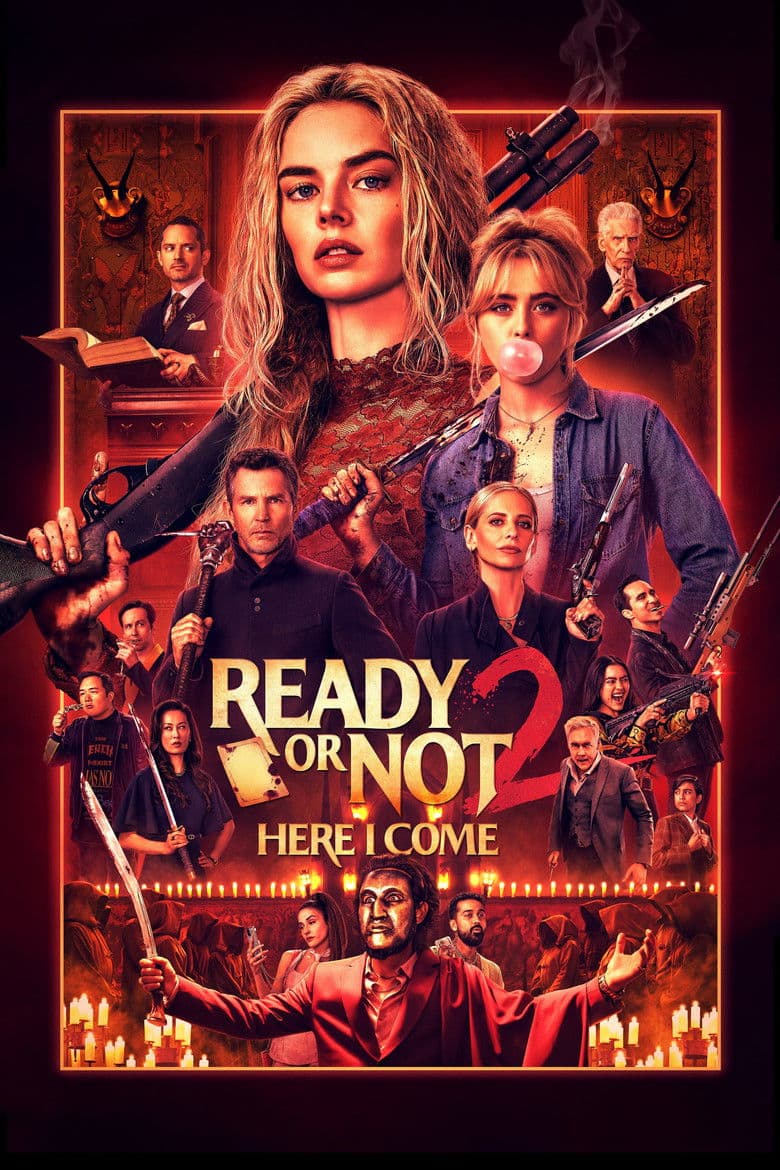
Five years after the original became a sleeper hit, Ready or Not is getting a sequel, with Ready or Not: Here I Come currently set for a March 20, 2026 release. The film brings back Samara Weaving as Grace, who survived her wedding night from hell, only to find that story isn’t finished.
Details around the plot remain limited in confirmed sources, but early descriptions suggest the sequel expands beyond the contained setting of the original, moving into a wider world connected to the same deadly traditions.
Radio Silence, the directing duo of Matt Bettinelli-Olpin and Tyler Gillett, are expected to return following their work on the original and the recent Scream films. After proving they can deliver commercially successful horror, the question now is whether they can expand something that arguably didn’t need expanding.
The original Ready or Not worked because it was contained. A tight, nasty thriller built around one idea, one location, and one character pushed to the edge. Grace’s arc was complete. She walked away from the wreckage, and that was the point.
This is where the sequel raises questions. Expanding the concept risks turning a sharp, contained story into something much broader and less focused. Horror has a habit of doing this, taking something that works in isolation and stretching it into mythology.
But at what point do we admit that not every successful film needs to become a franchise? The original Ready or Not worked because it was a nasty little surprise, a blood-soaked satire about eating the rich that arrived just as that sentiment was reaching a cultural boiling point. Turning it into a world-building exercise about secret societies and power struggles strips away everything that made it special.
Maybe I'm wrong. Maybe Radio Silence will find a way to expand this universe without losing the anarchic spirit of the original. Maybe Weaving's charisma can carry us through whatever convoluted mythology the screenwriters have cooked up. But when the best thing you can say about a sequel is "maybe it won't be terrible," that's usually a sign it shouldn't exist at all.