Sony Pictures Animation’s February 2026 release GOAT follows a small goat trying to break into the professional roarball league, a full-contact sport built around speed, impact, and spectacle. It’s a straightforward setup, and the film leans into a familiar underdog structure that audiences already recognise.
The February 13 release places it in that early-year window that often suits family films without putting them up against the larger summer or holiday titles. It’s a space that can work well if the film connects, particularly when the focus is on accessibility and broad appeal rather than scale.
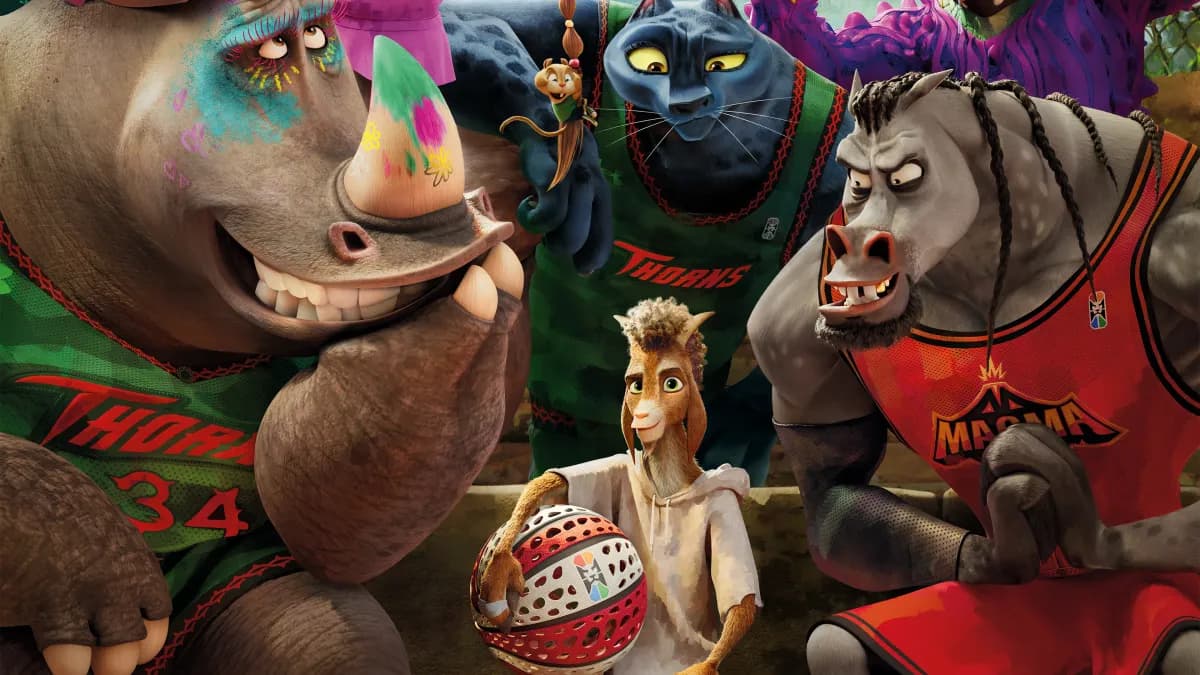
What’s more useful now is how the film has actually been received. Reviews are broadly aligned on one thing: the animation works. Critics have consistently pointed to the visual style as the standout element, with Variety describing it as a “vibrant” and energetic sports fable, and others highlighting the same sense of movement and pace in the action. The influence of Sony’s recent animation work is clear, with fast, stylised sequences doing most of the heavy lifting.
Where the response drops off is the writing. That’s the consistent criticism across multiple outlets. The story is being described as predictable and overly familiar, sticking closely to the standard underdog structure without really pushing beyond it. It follows a path that audiences already know, and while that keeps it accessible, it doesn’t give it much of a distinct edge.
The film sits within Sony Pictures Animation’s current direction, following on from the push toward stronger visual identity after the Spider-Verse films, although here it’s applied to a much more traditional, family-focused structure. The involvement of Stephen Curry’s Unanimous Media brings a clear sports angle to the project, which fits naturally with the premise rather than feeling like an add-on.
There’s a clear pattern in the response. The film does what it sets out to do, but it doesn’t stretch beyond that. It works for younger audiences, it looks good, and it moves quickly, but it rarely takes risks. Even the more positive reviews land in the same place: it’s enjoyable, but not particularly distinctive, and that’s what stops it standing out.
What we really love is the design of the animals themselves. They’re big, chunky characters with a lot of personality, and they stand out straight away. There’s a rhino with what looks like pride paint worked into the texture of its skin, and details like that carry a lot of the visual interest. It’s not a completely original animation style, but it does look really quite nice. The colour palette is particularly strong, leaning into greeny-greys, blues and purples, with quite vibrant tones that are still grounded by a lot of texture.